Uncategorized
Why Third Party Purity Testing Matters
Jun
A label can say 99% purity all day long. Without third party purity testing, that number is just a claim.
For serious research buyers, purity is not a marketing extra. It affects dosing calculations, reproducibility, storage decisions and whether one batch behaves like the last. In a category where documentation should carry more weight than branding, independent verification is one of the clearest signals that a supplier is taking quality control seriously.
What third party purity testing actually means
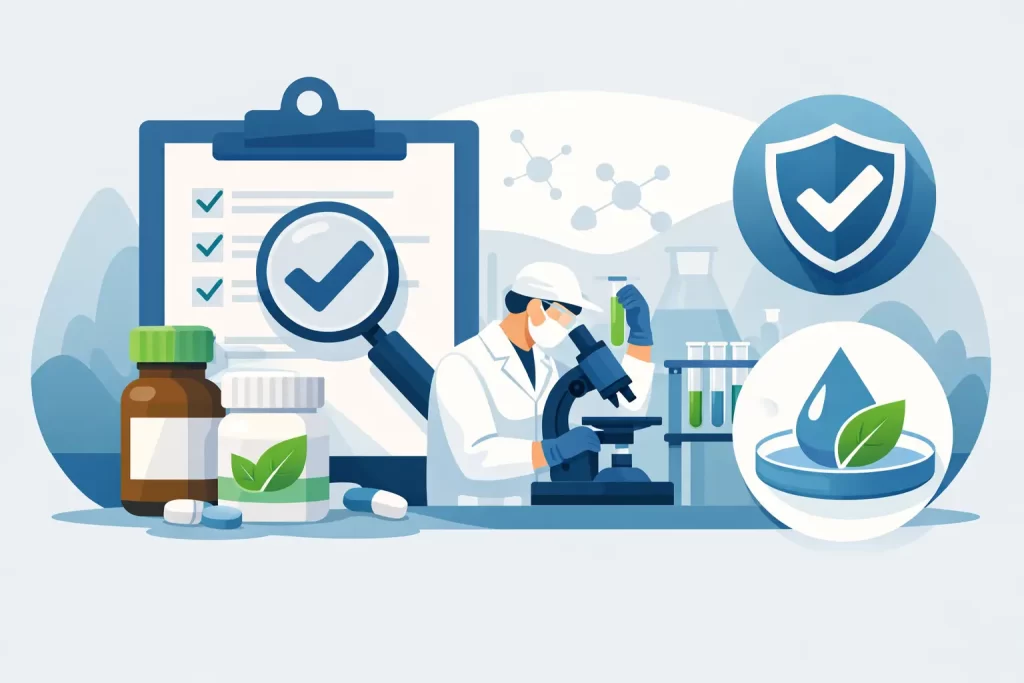
Third party purity testing means a compound is assessed by an independent laboratory rather than only by the manufacturer or seller. That distinction matters. When the same business that produces or sells the material is also the only source of the purity data, there is an obvious conflict of interest.
Independent testing does not guarantee perfection, and no competent supplier should pretend otherwise. What it does provide is a stronger level of verification around key quality markers, particularly identity and purity. For peptide buyers, that usually means analytical methods such as HPLC and mass spectrometry are used to confirm that the material matches the expected profile.
HPLC, or high-performance liquid chromatography, is commonly used to estimate purity by separating components within a sample. A strong chromatogram can show whether the main peak is dominant and whether notable impurities are present. Mass spectrometry adds another layer by checking molecular weight and helping confirm identity. Used together, these methods create a more credible picture than a single unchecked purity statement.
Why it matters more with peptides and research compounds
Peptides are not simple commodities. Even when two vials are labelled with the same compound name, quality can vary because of synthesis conditions, raw material quality, handling standards, degradation risk and post-production storage.
Minor impurities may not sound significant on paper, but they can affect research outcomes. A batch with poor purity may introduce noise into a protocol, complicate interpretation of results or create inconsistencies between runs. That is especially relevant when researchers are comparing observations over time and need tighter batch-to-batch reliability.
There is also the issue of misidentification. A vial can be branded correctly and still fail to match the claimed molecular profile. This is where third party purity testing becomes more than a checkbox. It helps establish that the compound is not only relatively clean, but also what it says it is.
For informed Australian buyers, the practical value is straightforward. Better documentation reduces uncertainty. It gives you a more solid basis for evaluating a batch before it enters a research workflow.
Third party purity testing is useful, but only if the documentation is real
A surprising number of buyers stop at the phrase third-party tested. That is too shallow.
What matters is whether the supplier can provide batch-level evidence, not just a broad quality claim on a product page. A proper Certificate of Analysis should relate to the specific batch being sold, and the testing methods should make sense for the type of compound. If the document is vague, undated, incomplete or clearly generic, the trust signal starts to collapse.
The strongest documentation usually includes batch identification, test date, analytical method, result summary and some indication of who performed the testing. If HPLC purity is stated, there should be a chromatographic basis for that number. If molecular identity is referenced, mass spectrometry data should support it.
This is where experienced buyers tend to separate polished ecommerce from actual quality systems. Clean design and bold claims are easy. Batch-linked documentation is harder to fake consistently.
What to look for in a COA
A Certificate of Analysis is only valuable if it helps you verify something real.
Start with the batch number. It should match the inventory being sold, not represent a general product template. Then look at the test methods used. HPLC and MS are common for peptides because they address two different but complementary questions: how pure is the sample, and does it match the expected molecular identity?
Next, assess the result itself. A stated purity of 99% or higher can be a strong indicator, but context still matters. Ask whether the figure refers to area normalisation on HPLC, whether the sample was tested recently, and whether the compound is one that is known to be sensitive in storage. Purity is not just about the number printed on a page. It is also about whether the handling and fulfilment process protects that quality after testing.
Finally, consider presentation quality. Real documentation is usually consistent, specific and technically coherent. Sloppy formatting alone does not prove a report is invalid, but contradictions, missing identifiers and non-specific language should raise questions.
The limits of purity testing
A disciplined buyer should understand what purity testing can and cannot do.
Purity testing does not tell you everything about long-term stability under poor storage conditions. It does not replace proper cold-chain handling where required. It does not guarantee that a batch will remain unchanged if it is exposed to heat, moisture or repeated handling after arrival.
It also does not tell the whole story about sterile processing, endotoxin profile or every possible contaminant unless those specific tests were performed. This is why broad claims like lab tested can be misleading. Testing is only meaningful when you know what was tested and why.
So yes, third party purity testing matters, but it should be viewed as part of a wider quality framework. The best suppliers pair independent testing with controlled manufacturing, careful packaging, sensible storage guidance and batch traceability.
Why domestic fulfilment can make the testing more meaningful
Testing is most useful when the product that arrives is still representative of the tested batch. That sounds obvious, but shipping conditions can undermine quality if a supplier has weak logistics.
For Australian buyers, domestic fulfilment can reduce unnecessary transit time and handling risk. If a peptide batch is tested, documented and then shipped locally under controlled conditions, there is a better chance that the material received still reflects the tested standard. That does not remove all risk, but it narrows the gap between certificate and delivered product.
This is one reason quality-focused suppliers emphasise both analytical verification and fulfilment discipline. A COA is stronger when the chain between batch release and dispatch is well managed.
How serious buyers use third party purity testing when comparing suppliers
Experienced buyers rarely evaluate a supplier on price alone. They look at the whole quality picture.
A supplier that offers batch-level COAs, independent HPLC/MS verification, clear purity standards and consistent documentation is usually easier to trust than one relying on generic product claims. The difference becomes even more obvious over repeat orders. Consistency is where quality systems prove themselves.
It also helps to watch how a supplier explains its testing. Transparent businesses tend to be specific. They talk about methods, batch verification and realistic limitations. Less reliable operators often hide behind vague language, inflated promises or copied technical text.
For research-grade purchasing, confidence is built through repeatable evidence. At Aussie Peptide Labs, that is why third-party HPLC and mass spectrometry testing, batch-level COAs and stated purity standards remain central to the quality position rather than treated as decorative sales language.
The real value is reducing uncertainty
Research buyers are not chasing perfect certainty because that does not exist. They are trying to remove avoidable uncertainty.
That is the practical role of third party purity testing. It helps verify identity, supports purity claims and gives buyers documentation they can assess before making a purchasing decision. It also creates accountability. Once a supplier ties a batch to independent data, the conversation shifts from trust us to here is the evidence.
In this category, that shift matters. A peptide is only as credible as the documentation behind it, and the suppliers worth dealing with understand that quality claims should be proven, not repeated.
