Uncategorized
Peptide Reconstitution Guide for Clean Results
Jul
A peptide that assays clean on paper can still produce poor research outcomes if the reconstitution step is sloppy. That is why a solid peptide reconstitution guide matters. The vial, solvent, concentration target, handling technique, and storage plan all affect stability, repeatability, and the quality of your downstream work.
For research buyers, reconstitution is not a cosmetic step. It is the point where a dry, lyophilised compound becomes a working laboratory solution. Small errors here compound quickly. Add the wrong volume, use the wrong diluent, introduce contamination, or store the solution poorly, and you can undermine an otherwise high-purity material.
What peptide reconstitution actually means
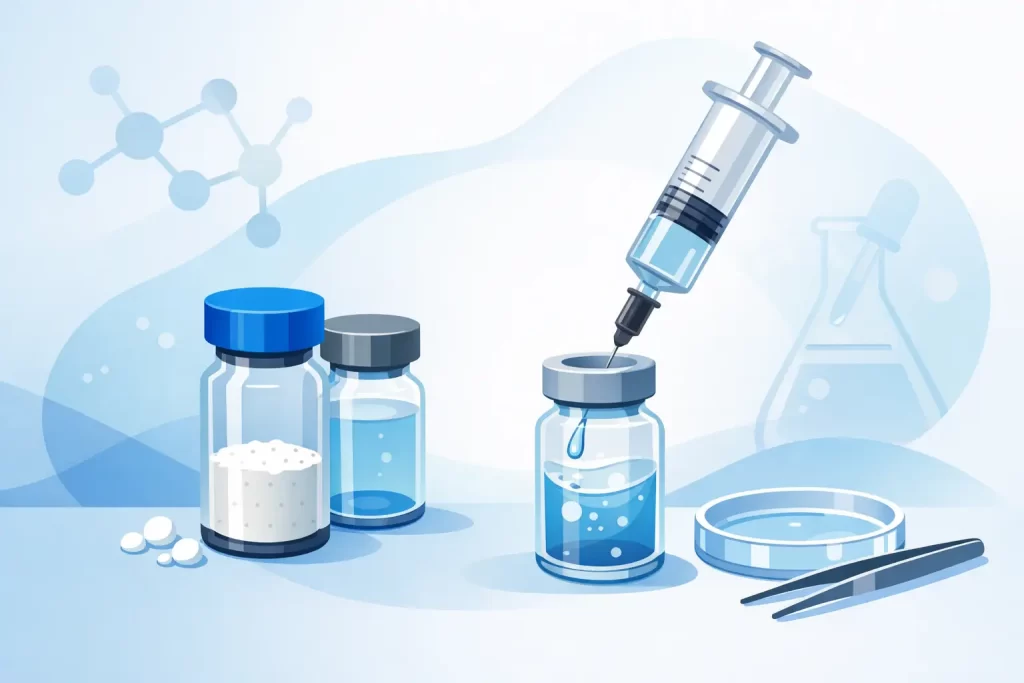
Reconstitution is the process of adding a sterile diluent to a lyophilised peptide so it can be measured and handled as a solution. Most peptides are supplied in freeze-dried form because that format is generally more stable in storage and easier to transport. Once solvent is added, the peptide becomes more usable, but often less stable over time.
That trade-off matters. Lyophilised material usually offers better shelf stability. Reconstituted material offers convenience and dosing precision for research workflows. The practical question is not whether one form is better. It is whether the concentration, solvent, and storage conditions fit the specific compound and timeline of use.
Start with the label, batch data, and your concentration target
Before opening a vial, confirm three things: the amount of peptide in the vial, the target concentration you want after reconstitution, and the appropriate solvent for that compound. A 5 mg vial can become 1 mg/mL, 2.5 mg/mL, or another working concentration depending on the volume added. There is nothing inherently correct about one final concentration in isolation. It depends on your research protocol and the precision you need during measurement.
If the vial contains 5 mg and you add 2 mL of diluent, the final concentration is 2.5 mg/mL. If you add 5 mL, it becomes 1 mg/mL. The maths is simple, but it must be done before the solvent is drawn up, not after. Researchers often create avoidable problems by reconstituting first and then trying to reverse-engineer concentration from memory.
For quality-focused buyers, this is also where documentation matters. Batch identification, stated purity, and COA-linked testing help establish confidence in the starting material. Reconstitution does not replace analytical verification, but it does protect the integrity of a verified batch.
Choosing the right diluent in a peptide reconstitution guide
In most research settings, the common diluents are bacteriostatic water or sterile water, depending on the peptide and intended handling conditions. Bacteriostatic water contains a preservative that can help limit microbial growth after first puncture, which makes it a practical option for multi-use handling in many laboratory contexts. Sterile water may be preferred in some cases where preservative compatibility is a concern.
This is where one-size-fits-all advice becomes unreliable. Some peptides are straightforward and dissolve readily in water-based diluents. Others can be more temperamental, especially if they tend to cling to the vial, foam easily, or show reduced solubility at certain concentrations. In select research contexts, a small amount of an alternative solvent may be used first, followed by dilution, but that should only be done when the compound data supports it.
If there is no clear compound-specific guidance, the safest approach is to stay conservative: use a sterile, suitable aqueous diluent, avoid aggressive shaking, and work at a concentration known to dissolve cleanly. For many researchers, the issue is not just whether the peptide dissolves, but whether it remains stable and easy to handle across the intended usage window.
Sterile technique is not optional
A clean reconstitution workflow protects both the peptide and the reliability of the data that follows. Start with a sanitised work surface. Use sterile syringes and needles, wipe vial stoppers with alcohol, and avoid repeated unnecessary punctures. If the peptide will be stored after reconstitution, contamination control becomes even more important.
When adding the diluent, direct the stream against the inside wall of the vial rather than blasting the powder directly. This reduces foaming and avoids stressing delicate compounds. Once the solvent is in, let the vial sit briefly if needed, then swirl gently. Do not shake it like a protein powder tub. Vigorous agitation can denature or otherwise destabilise certain peptides.
A clear solution is often the goal, but clarity alone does not guarantee ideal handling. Some compounds dissolve slowly. Patience is usually better than force. If a peptide does not dissolve as expected, the answer is not automatically to shake harder or add random solvents.
How to calculate concentration without guesswork
Every peptide reconstitution guide should make the maths unambiguous. Use this formula:
Final concentration = total peptide amount divided by total diluent volume.
If a vial contains 10 mg and you add 4 mL, the final concentration is 2.5 mg/mL. If a vial contains 2 mg and you add 1 mL, the final concentration is 2 mg/mL. From there, measured volumes can be converted into mass based on the same ratio.
What matters in practice is choosing a concentration that supports accurate measurement. Too concentrated, and very small volume changes may create large swings in delivered amount. Too dilute, and handling becomes inefficient or storage space becomes wasteful. The best concentration is the one that is soluble, stable enough for your timeline, and easy to measure consistently.
Storage after reconstitution
Once a peptide has been reconstituted, storage conditions matter more than many buyers realise. As a general rule, keep the solution refrigerated unless compound-specific data indicates otherwise. Limit temperature swings. Repeated warming and cooling can accelerate degradation. Light protection may also be relevant for certain compounds, so storing the vial away from direct light is sensible.
The broader principle is simple: reconstitute only what you expect to use within a reasonable research window. Dry peptide often tolerates storage better than the same material in solution. If a full vial does not need to be in active use, some researchers prefer to plan around smaller reconstitution volumes or controlled aliquoting, provided sterile handling is maintained.
Freezing can be useful in some cases, but it is not universally ideal. Freeze-thaw cycles can damage certain peptides. If freezing is part of the plan, aliquots are often more sensible than repeatedly thawing the same vial. The right approach depends on the compound, the duration of storage, and whether the research schedule is predictable.
Common reconstitution mistakes that affect results
Most problems are not dramatic. They are small process failures that erode consistency. Misreading the vial strength, using the wrong volume, skipping label updates, or failing to note the reconstitution date are all common and avoidable. So is assuming that every peptide behaves identically in solution.
Another issue is treating purity as a substitute for handling discipline. Even a 99%+ verified peptide can be compromised by poor technique after it leaves the vial in lyophilised form. High-quality manufacturing, third-party testing, and COA verification give researchers a strong starting point. They do not remove the need for proper dilution, sterile technique, and storage control.
There is also a practical error that shows up often in smaller labs and home research setups: reconstituting without a written record. The concentration, solvent type, date, batch, and storage conditions should be documented immediately. Relying on memory is how otherwise careful workflows become inconsistent.
A practical peptide reconstitution guide mindset
The best peptide reconstitution guide is not a rigid recipe for every compound. It is a disciplined way of thinking. Confirm the vial content. Choose a solvent that suits the peptide. Calculate the concentration before you start. Use sterile technique. Dissolve gently. Store with intention. Record what you did.
For Australian research buyers, especially those sourcing domestically for faster fulfilment and cleaner batch traceability, this mindset reduces friction. It supports repeatable handling and makes it easier to compare outcomes across batches and protocols. That is part of why serious suppliers put so much emphasis on documentation, purity verification, and support material alongside the catalogue.
If your goal is cleaner handling and more reliable research conditions, treat reconstitution as part of quality control, not a quick prep step. The vial deserves the same precision after purchase as it did during synthesis and testing.
